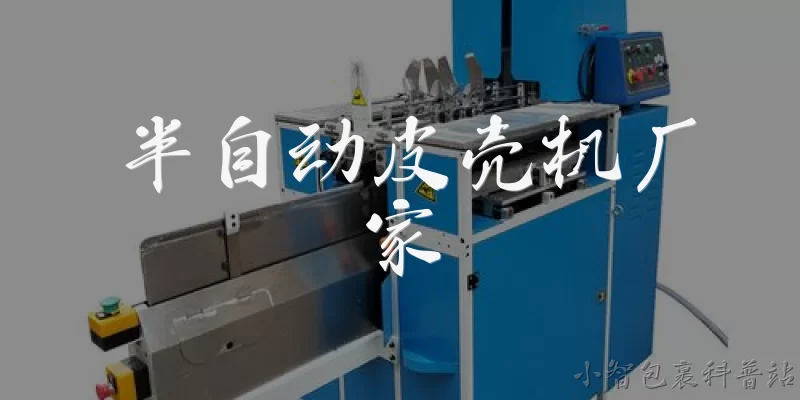
Fully Automatic Creasing Matrix Manufacturer:What should I look for in a fully automatic creasing matrix manufacturer in 2026?
Q: What should I look for in a fully automatic creasing matrix manufacturer in 2026?
A: When evaluating a fully automatic creasing matrix manufacturer in 2026, prioritize automation depth, material consistency, and digital integration. Leading manufacturers now pair high-speed CNC or laser machining with AI-driven quality inspection that checks channel depth, bevel angle, and edge straightness micron by micron, so every matrix in a batch performs identically. Ask whether the factory operates fully automatic production lines from raw material feeding to packaging, since this reduces human error and shortens lead times. Material matters too: top-tier suppliers use high-grade phenolic resin or durable polymer composites engineered for long runs, and they can document hardness and wear-resistance data. Also check for digital traceability, such as QR codes or RFID tags on each matrix, which let you verify production parameters and warranty status. Finally, confirm the manufacturer offers customization for different creasing rules, board thicknesses, and machine brands, along with responsive technical support and fast sampling. A supplier that combines smart manufacturing, rigorous testing, and global service capacity will keep your die-cutting operation efficient and consistent throughout 2026 and beyond.
Q: How does a fully automatic creasing matrix production line improve quality and speed in 2026?
A: In 2026, a fully automatic creasing matrix production line transforms quality and speed by removing manual variability at every stage. Raw materials are fed automatically, then processed on CNC or laser systems that cut and shape channels with repeatable precision, often within a few microns. Inline vision and laser measurement systems inspect 100 percent of output for depth, width, angle, and surface defects in real time, and defective pieces are ejected immediately, so only consistent matrices reach packing. Automated assembly, adhesive application, and packaging further reduce handling and contamination risks. The result is faster throughput: modern lines can produce thousands of matrices per hour while maintaining tight tolerances, which shortens lead times and supports just-in-time inventory. Because the process is digitally controlled, manufacturers can quickly switch between specifications for different creasing rules or board grades, improving flexibility. For converters, this means fewer setup problems on the die-cutter, less downtime from worn or mismatched matrices, and more predictable crease quality. Ultimately, the automation reduces labor costs, minimizes waste, and delivers the batch-to-batch consistency that high-volume packaging production demands.
Q: What trends are shaping fully automatic creasing matrix manufacturing in 2026?
A: Several trends are shaping fully automatic creasing matrix manufacturing in 2026. First, smart factories are becoming standard: manufacturers integrate IoT sensors, MES software, and AI analytics to monitor machine health, predict maintenance, and optimize output in real time. Second, sustainability drives material innovation, with suppliers developing recyclable, bio-based, or lower-VOC polymer and resin matrices that still meet durability requirements. Third, customization and rapid prototyping are accelerating through digital printing and automated tooling changes, allowing small-batch, made-to-order matrices without sacrificing efficiency. Fourth, global supply chain resilience is a priority, so leading manufacturers are regionalizing production and holding buffer stock of critical raw materials. Fifth, quality standards keep rising, with inline metrology and full traceability expected as default features rather than premium options. Finally, closer collaboration between matrix makers and die-cutting machine OEMs is producing integrated solutions that pair specific matrix profiles with optimized creasing rules and machine settings. For buyers, these trends mean more consistent product quality, faster turnaround, greener options, and stronger technical support. Choosing a manufacturer that embraces these developments will help packaging operations stay competitive and reduce total cost of ownership in 2026.
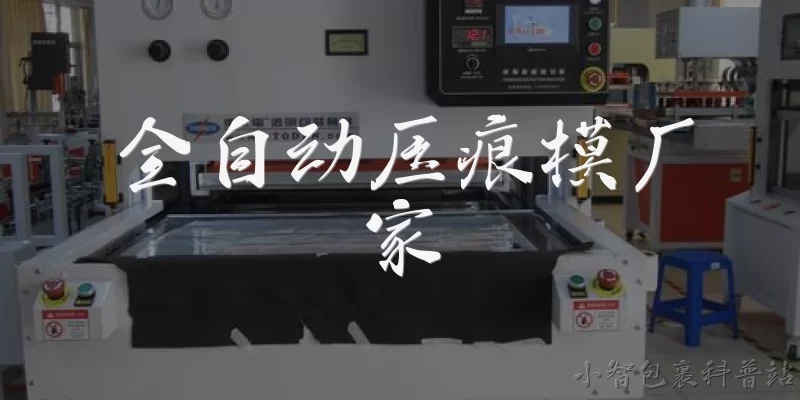
Dialogue about
Common scenarios of "Fully Automatic Creasing Matrix Manufacturer"
【Buyer】 Hi, I'm looking for a fully automatic creasing matrix manufacturer. Can you help me find one?
【Assistant】 Certainly! I can help you with that. Could you please specify your requirements? For example, what type of creasing matrix do you need, and what is your production capacity?
【Buyer】 We need creasing matrix for packaging boxes, and we require a production capacity of about 5000 pieces per day.
【Assistant】 Got it. There are several manufacturers specializing in fully automatic creasing matrix machines. Do you have a preferred location or budget range?
【Buyer】 We prefer manufacturers in Asia, and our budget is around $50,000 to $80,000.
【Assistant】 I see. Based on your requirements, I can recommend a few reputable manufacturers in China and Taiwan. Would you like me to provide their contact information?
【Buyer】 Yes, please. Also, can you tell me about the key features I should look for in a fully automatic creasing matrix machine?
【Assistant】 Absolutely. Key features include automation level, precision, speed, compatibility with different matrix sizes, and after-sales support. Some machines offer AI-based quality control.
【Buyer】 That's helpful. What about maintenance and training? Do these manufacturers provide that?
【Assistant】 Most reputable manufacturers offer installation, training, and ongoing maintenance services. It's important to check their service network and response time.
【Buyer】 Can you also advise on the typical lead time for delivery and installation?
【Assistant】 Typically, lead time is 4-8 weeks after order confirmation, depending on customization. Installation and training usually take 1-2 weeks.
【Buyer】 What about payment terms? Do they accept letters of credit?
【Assistant】 Many manufacturers accept L/C, T/T, and other standard payment methods. It's negotiable based on the order size and relationship.
【Buyer】 Could you also recommend any specific models that are known for reliability and efficiency?
【Assistant】 Sure. The XYZ-2000 from Company A and the ABC-300 from Company B are popular for their reliability and efficiency. They both have high automation and precision.
【Buyer】 Thanks. I'll look into those. Can you send me a comparison chart of these models?
【Assistant】 Of course. I'll email you a detailed comparison including specifications, prices, and user reviews. Please provide your email address.
【Buyer】 My email is buyer@example.com. Also, do you know if these manufacturers have local distributors in Europe for support?
【Assistant】 Some do have distributors in Europe, but it varies. I'll include that information in the email as well. Let me know if you need further assistance.