Automatic mixing production line:What is an automatic mixing production line?
Q: What is an automatic mixing production line?
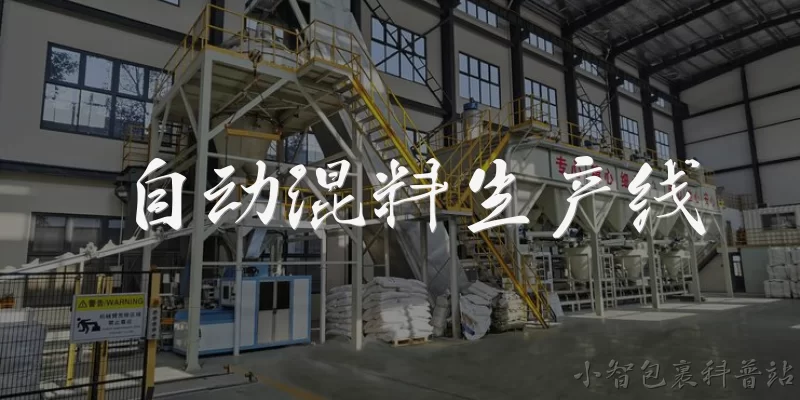
A: An automatic mixing production line is a fully integrated system that combines raw material feeding, precise weighing, mixing, and discharge processes with minimal human intervention. It typically includes silos, screw conveyors, weighing hoppers, mixers, and control systems like PLCs. Such lines are used in industries such as food, chemical, pharmaceutical, and construction to produce homogeneous blends at high throughput. The automation ensures consistent quality, reduces labor costs, and minimizes contamination risks. Advanced models offer recipe management, real-time monitoring, and self-diagnosis, making them essential for large-scale manufacturing where precision and repeatability are critical.
Q: What are the key components of an automatic mixing production line?
A: Key components include raw material storage silos or hoppers, accurate feeding devices (e.g., screw feeders, vibratory feeders), weighing systems with load cells, the central mixer (ribbon, paddle, or planetary), discharge valves, and a central control unit (PLC or SCADA). Additional elements are dust collectors, pneumatic conveying systems, and safety interlocks. The control system manages sequence, mixing time, speed, and recipe selection. Some lines also integrate liquid addition systems and temperature control. Each component must be synchronized to ensure uniform mixing and consistent batch quality, making the design highly dependent on the specific materials and production requirements.
Q: What are the benefits of using an automatic mixing production line?
A: Benefits include higher production efficiency, consistent product quality, reduced labor costs, and improved safety by minimizing operator exposure to dust or hazardous materials. Automation eliminates human errors in weighing and mixing ratios, ensuring batch-to-batch uniformity. It also enables 24/7 operation with minimal supervision, reduces material waste, and provides traceability through data logging. Maintenance costs may be lower due to predictive diagnostics. Additionally, automatic lines can easily switch between recipes, making them flexible for multi-product manufacturing. Overall, they enhance competitiveness by increasing output and reducing operational costs.
Q: How does an automatic mixing production line ensure mixing uniformity?
A: Uniformity is ensured through precise control of several factors: accurate weighing of each ingredient, proper sequencing of material addition, optimized mixer design (e.g., ribbon or paddle geometry), and controlled mixing time and speed. Sensors monitor motor load or torque to detect inconsistencies. Some systems use inline analyzers or near-infrared sensors for real-time composition checks. The control system adjusts parameters automatically to maintain the target coefficient of variation (CV). After mixing, sampling and laboratory testing validate homogeneity. Regular maintenance of mixing elements and calibration of weighing devices are also critical to sustain uniformity over time.
Q: What industries commonly use automatic mixing production lines?
A: Industries include food and beverage (e.g., spices, baking mixes, snacks), chemical (e.g., detergents, fertilizers, paints), pharmaceutical (e.g., tablets, ointments), construction (e.g., dry mortar, concrete additives), and plastics (e.g., masterbatch, compounds). Also used in agriculture for feed production and in cosmetics for creams and powders. Each industry has specific requirements: food lines emphasize hygiene and cleanability, pharmaceutical lines need validation and containment, and chemical lines require corrosion resistance. The common thread is the need for consistent, high-volume mixing of dry powders or granules with minimal human intervention.
Words of experience
Common scenarios of "Automatic mixing production line"
【Engineer】 Good morning, everyone. Today we're going to discuss the implementation of the new automatic mixing production line. I'd like to hear your thoughts on the overall design.
【Production Manager】 Good morning. From a production standpoint, we need a system that can handle multiple recipes and switch between them quickly. Downtime for changeovers must be minimized.
【Quality Control Specialist】 I agree with the quick changeover, but we also need to ensure consistent mixing quality. The system should have real-time monitoring of viscosity, temperature, and homogeneity.
【Engineer】 Absolutely. We're planning to integrate inline sensors for continuous feedback. The control system will adjust mixing parameters automatically based on the sensor data.
【Maintenance Technician】 That sounds advanced, but how easy will it be to maintain? We need access to all components for cleaning and repair without dismantling the entire line.
【Engineer】 We've designed modular sections with quick-release couplings. Each mixing unit can be isolated and removed for maintenance. Also, the system will have self-diagnostic features to predict failures.
【Production Manager】 What about throughput? Our current manual line produces 500 kg per hour. Can the automatic line match or exceed that?
【Engineer】 Yes, the design capacity is 800 kg per hour, with a potential to scale up to 1000 kg per hour with additional modules. The automation will also reduce labor costs and human error.
【Quality Control Specialist】 Reducing human error is key. But we must also comply with industry standards. Will the system be able to log all process data for traceability?
【Engineer】 Certainly. The control system includes a data historian that records all parameters, batch numbers, and operator actions. Reports can be generated automatically for audits.
【Maintenance Technician】 What about cleaning? In our current setup, cleaning between batches is time-consuming. Does the automatic line have a clean-in-place (CIP) system?
【Engineer】 Yes, we've integrated a CIP system that automatically cleans all product-contact surfaces. It uses a combination of detergents and hot water, and the cycle can be customized for different products.
【Production Manager】 That will save a lot of time. But how long does a CIP cycle take? We need to balance cleaning with production output.
【Engineer】 A typical CIP cycle takes about 30 minutes, but we can optimize it based on the product. For highly viscous products, it might take longer, but we can schedule cleaning during off-peak hours.
【Quality Control Specialist】 I'm also concerned about cross-contamination between batches. How does the system prevent that?
【Engineer】 The CIP system is designed to eliminate residues. Additionally, we use dedicated lines for allergen-containing products and validate cleaning effectiveness with swab tests. The control system enforces a cleaning protocol before any recipe change.
【Maintenance Technician】 What about spare parts? Are they standard or proprietary? We need to ensure we can get replacements quickly.
【Engineer】 We've used mostly standard components from reputable suppliers. For proprietary parts, we'll provide a recommended spares list and a local distributor to ensure fast delivery.
【Production Manager】 What's the estimated timeline for installation and commissioning? We need to plan our production schedule accordingly.
【Engineer】 Installation will take about 4 weeks, followed by 2 weeks of commissioning and training. We can phase it to minimize disruption to your current operations. We'll provide a detailed schedule next week.