UV printer development:What was the early development history of UV printers?
Q: What was the early development history of UV printers?
A: UV printer development began in the 1980s with the invention of UV-curable inks, which harden instantly when exposed to ultraviolet light. Early industrial applications used these inks for screen printing and offset printing. In the 1990s, piezo printhead technology enabled the first flatbed UV printers, allowing direct printing onto rigid substrates like wood, glass, and metal. These early machines were large, expensive, and used for industrial marking. By the 2000s, companies like Vutek and Durst commercialized wide-format UV printers, paving the way for modern digital UV printing across signage, packaging, and promotional products.
Q: How have printhead technologies advanced in UV printer development?
A: Printhead technology has been central to UV printer development. Early UV printers used modified piezo printheads with limited nozzle counts and lower drop frequencies. Over time, manufacturers like Epson, Ricoh, Kyocera, and Fujifilm Dimatix developed specialized printheads with higher nozzle density, increased drop volumes, and better temperature control for UV inks. Key advances include micro-electro-mechanical systems (MEMS) fabrication, grayscale printing for variable dot sizes, and recirculating ink systems that prevent UV ink from curing inside the printhead. These improvements have boosted print speeds, resolution, and reliability, enabling UV printers to handle high-viscosity inks and produce photorealistic images on diverse materials.
Q: What role do UV-LED curing systems play in UV printer development?
A: UV-LED curing systems have revolutionized UV printer development by replacing traditional mercury arc lamps. Early UV printers used mercury lamps, which were bulky, generated high heat, consumed significant energy, and required frequent replacement. UV-LED curing, introduced in the late 2000s, offers instant on/off operation, lower power consumption, longer lifespan, and reduced heat output. This allowed UV printers to be more compact, energy-efficient, and suitable for heat-sensitive substrates. LED curing also enabled faster print speeds and better adhesion control. Today, nearly all new UV printers use UV-LED curing, and ongoing development focuses on higher irradiance, longer wavelengths for deeper curing, and improved uniformity.
Q: How has the application scope of UV printers expanded through development?
A: UV printer development has expanded applications from simple industrial marking to diverse fields. Initially, UV printers were used for coding and marking on products. As print quality and substrate compatibility improved, applications grew to include wide-format signage, vehicle wraps, and point-of-purchase displays. Advances in ink adhesion and flexibility enabled printing on plastics, glass, ceramics, metals, and textiles. The development of roll-to-roll and hybrid flatbed/roll printers allowed both rigid and flexible materials. Today, UV printers are used in packaging prototyping, personalized gifts, electronics decoration, 3D printing, and even dental and medical device marking, continually pushing into new markets.
Q: What are the future trends in UV printer development?
A: Future UV printer development focuses on automation, sustainability, and new materials. Trends include higher productivity with multi-pass and single-pass printing, integration of AI for print quality control and predictive maintenance, and robotic loading/unloading for unattended operation. Sustainable development aims to reduce ink waste, use bio-based or low-migration UV inks, and improve energy efficiency. There is also growth in 3D UV printing, where UV printers build objects layer by layer. Additionally, compact desktop UV printers are becoming more affordable for small businesses. Interconnectivity and cloud-based workflow management are expected to streamline production, making UV printing more accessible and versatile across industries.
Dialogue about
Common scenarios of "UV printer development"
【TechEnthusiast】 Hey, I've been hearing a lot about UV printers lately. What exactly are they?
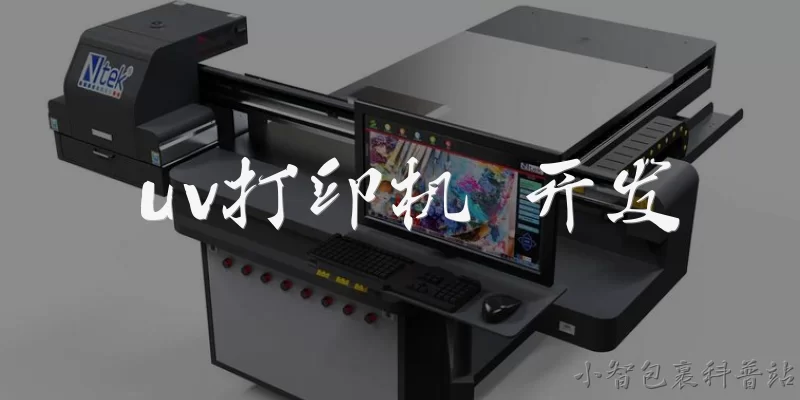
【IndustryExpert】 UV printers are a type of inkjet printer that use ultraviolet light to instantly cure or dry the ink as it's printed. This allows printing on a wide range of materials, including plastic, glass, metal, and more.
【TechEnthusiast】 That sounds versatile. How have UV printers evolved over the years?
【IndustryExpert】 They've come a long way. Early UV printers were large, expensive, and mainly used in industrial settings. Now, they're more compact, affordable, and accessible to small businesses and even hobbyists.
【TechEnthusiast】 What technological advancements have driven this evolution?
【IndustryExpert】 Key advancements include better printhead technology, more efficient UV LED curing systems, improved ink formulations, and software that enhances color accuracy and speed.
【TechEnthusiast】 Are UV LED curing systems more energy-efficient than traditional UV lamps?
【IndustryExpert】 Absolutely. UV LED systems consume less power, last longer, and produce less heat, making them safer and more environmentally friendly.
【TechEnthusiast】 What about the inks? Are there any recent innovations?
【IndustryExpert】 Yes, there are now flexible inks for printing on materials that bend, and even conductive inks for printing electronic circuits. Also, there's a focus on eco-friendly inks with low VOCs.
【TechEnthusiast】 That's impressive. What industries are benefiting most from UV printing?
【IndustryExpert】 Signage, packaging, promotional products, electronics, automotive, and even textiles. The ability to print directly on objects opens up many possibilities.
【TechEnthusiast】 How does UV printing compare to traditional printing methods like screen printing?
【IndustryExpert】 UV printing offers faster turnaround, no need for screens or plates, and the ability to print variable data. It's also more sustainable due to less waste.
【TechEnthusiast】 Are there any limitations to UV printing?
【IndustryExpert】 Some challenges include adhesion on certain materials, the need for surface pretreatment, and the initial cost of the equipment. But ongoing research is addressing these.
【TechEnthusiast】 What does the future hold for UV printers?
【IndustryExpert】 We can expect even faster speeds, higher resolution, more automation, and integration with IoT for remote monitoring. Also, more affordable desktop models for small businesses.
【TechEnthusiast】 That sounds exciting. Thanks for the insights!
【IndustryExpert】 You're welcome! It's a rapidly evolving field, so stay tuned for more innovations.