
Corrugated box production line process:What are the key stages of a modern corrugated box production line process in 2026?
Q: What are the key stages of a modern corrugated box production line process in 2026?
A: In 2026, a modern corrugated box production line typically follows a streamlined sequence: starch mixing, single facer corrugation, bridge storage, glue application and double facer bonding, rotary die-cutting, folder-gluer stitching or gluing, and finally palletizing. The single facer remains the heart of the line, where linerboard and medium are heated and bonded into single-face web. After the bridge accumulates material for tension control, the double facer applies starch to both sides and bonds the outer liner under heat and pressure. Advanced lines now integrate AI-based vision inspection at the die-cutter to detect print or cut defects in real time, and robotic palletizers with collaborative arms handle stacking without manual intervention. Energy recovery systems on the double facer reduce steam consumption by up to 18% compared to 2020 models. Digital twins are also common: sensors across each station feed a virtual replica, allowing operators to predict jams or glue starvation before they occur. This end-to-end automation means a typical 2.5-meter line can run at 350 meters per minute with only two operators per shift, drastically improving throughput and consistency for high-volume e-commerce packaging.
Q: How is automation and AI changing corrugated box production line processes in 2026?
A: By 2026, automation and AI have moved from optional add-ons to core components of corrugated box production lines. Machine vision cameras now inspect every board at speeds up to 400 meters per minute, using deep learning models to classify defects like warp, misprint, or glue skips with over 99.5% accuracy. Predictive maintenance algorithms analyze vibration, temperature, and torque data from motors and bearings, scheduling service before unplanned downtime occurs—reducing line stoppages by up to 40% in leading plants. Autonomous mobile robots (AMRs) transport raw paper rolls and finished pallets, eliminating forklift traffic on the production floor. Additionally, AI-driven production scheduling optimizes changeovers between box sizes, cutting setup waste by 25%. Cloud-based dashboards allow plant managers to monitor OEE (Overall Equipment Effectiveness) across multiple sites in real time. The role of human operators has shifted to exception handling and quality oversight, with augmented reality glasses providing step-by-step repair guidance. These technologies not only boost output but also address labor shortages and sustainability goals by minimizing material waste and energy use—key priorities for packaging manufacturers in 2026.
Q: What are the biggest challenges and solutions in corrugated box production line processes today?
A: In 2026, corrugated box production lines face three major challenges: raw material variability, energy costs, and skilled labor shortages. Recycled paper quality fluctuates more than ever due to global supply chain shifts, causing inconsistent board strength and printability. The solution lies in adaptive process control: inline moisture and basis weight sensors feed data to a PLC that automatically adjusts starch viscosity, heat, and pressure on the double facer, ensuring consistent bonding despite input variations. Energy costs have prompted the adoption of high-efficiency steam systems and waste heat recovery from the corrugator, with some plants achieving 30% lower thermal energy per ton. For labor, the industry is responding with remote monitoring and AI-assisted troubleshooting. A single technician can now oversee multiple lines from a central control room, using digital twins to simulate fixes before applying them. However, integrating legacy equipment with new IoT sensors remains a hurdle—many older machines lack open protocols. Retrofitting with edge gateways and standardized OPC UA interfaces is the common workaround. Finally, sustainability regulations are pushing lines to minimize trim waste and use water-based inks, requiring closed-loop glue systems and better dust extraction. Addressing these challenges demands a blend of hardware upgrades, software intelligence, and workforce retraining.
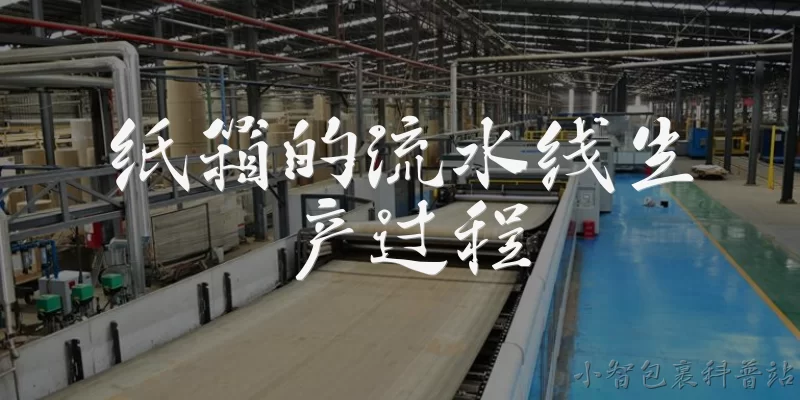
Dialogue about
Common scenarios of "Corrugated box production line process"
【Production Manager】 Good morning, team. We need to review the corrugated box production line process to ensure we're meeting efficiency targets. Let's start with the basics: what are the key steps?
【Line Supervisor】 Sure. The process starts with raw material preparation: kraft paper rolls are loaded onto the corrugator. Then we have the corrugation process where the paper is heated, moistened, and formed into flutes.
【Quality Control】 Don't forget the gluing stage. After fluting, starch adhesive is applied to the tips of the flutes, and then the liner is bonded to create the single-face web.
【Line Supervisor】 Right. Then the single-face web goes through a second gluing stage where the other liner is added, forming the double-face corrugated board. It's then heated and dried.
【Production Manager】 How do we handle the drying? I've heard moisture control is critical.
【Quality Control】 Yes, the drying section has hot plates and a belt that applies pressure. We monitor temperature and speed to ensure proper adhesion and prevent warping.
【Line Supervisor】 After drying, the board goes through a cooling section, then to the slitter-scorer where it's cut to size and scored for folding.
【Maintenance Tech】 I'd like to add that the slitter-scorer blades need regular sharpening to avoid ragged edges. We have a schedule for that.
【Production Manager】 Good. What about printing? Is it done inline or offline?
【Line Supervisor】 We have both options. Inline printing is done with flexographic printers right after the slitter-scorer. Offline printing is done separately on a printer-slotter.
【Quality Control】 Inline printing saves time but requires careful registration control. We inspect print quality at regular intervals.
【Production Manager】 Then what? The boxes need to be folded and glued, right?
【Line Supervisor】 Yes, after printing, the board goes to a folder-gluer where it's folded and glued into the final box shape. Then it's counted and stacked.
【Maintenance Tech】 The folder-gluer is a critical piece. We perform daily checks on the glue nozzles and belts to prevent jams.
【Production Manager】 How do we ensure quality throughout? Any specific checkpoints?
【Quality Control】 We have checkpoints at each stage: after corrugation, we check flute height and bond strength; after slitting, we check dimensions; after printing, we check color and registration; after folding, we check glue adhesion and box integrity.
【Line Supervisor】 We also do random sampling for compression strength and other mechanical properties.
【Production Manager】 What about waste reduction? Any tips?
【Line Supervisor】 Optimizing the cutting pattern on the slitter-scorer reduces trim waste. Also, maintaining consistent moisture in the corrugator prevents warp and rejects.
【Quality Control】 And regular training for operators helps them spot issues early, reducing downtime and waste.
【Production Manager】 Great. Let's implement these best practices and monitor our KPIs. Thanks, everyone.