
Carton Packaging Production Equipment:What types of carton packaging production equipment are commonly used in the industry?
Q: What types of carton packaging production equipment are commonly used in the industry?
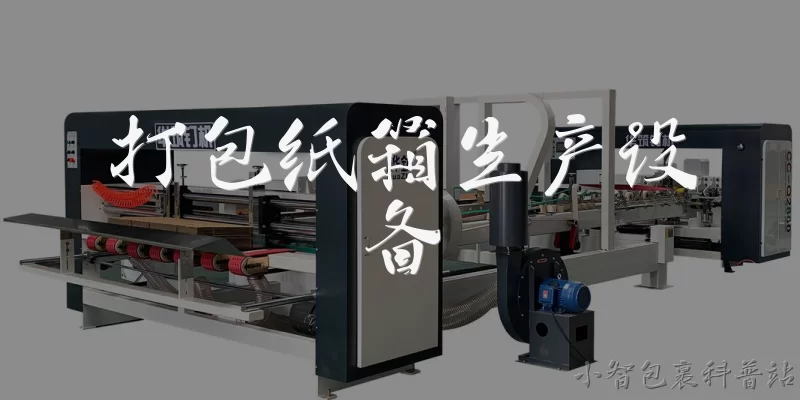
A: Carton packaging production equipment covers a broad range of machines used across the converting and packaging workflow. Common types include corrugators that produce corrugated board, flexo folder-gluers and die-cutters that print, cut, and fold blanks, and folder-gluers that form and glue cartons. Rotary die-cutters handle high-volume blanking, while flatbed die-cutters suit more complex or thicker materials. Stitching machines, window patchers, and laminators add structural or decorative features. For rigid and folding cartons, you'll also find sheet-fed offset presses, coating units, and auto-platen die-cutters. Downstream, case packers, palletizers, and wrappers integrate with the line. Choosing equipment depends on carton style, run length, substrate, and required print quality, so most plants combine several machine types into a balanced production line.
Q: How do you choose the right carton packaging production equipment for a new factory?
A: Start by defining your product mix: carton style (RSC, die-cut, rigid), substrates, and typical run lengths. Map the full process from board to finished carton, then select machines for printing, die-cutting, folding-gluing, and any finishing steps. Match capacity to forecast demand, but leave 15–20% headroom for growth. Evaluate automation levels—auto feeders, inline inspection, and quick-change tooling reduce labor and setup time. Check compatibility between machines so blanks flow smoothly between stages. Consider total cost of ownership, including energy, spare parts, maintenance, and operator training, not just purchase price. Verify local service support and lead times for consumables. Finally, run samples on candidate equipment with your actual board and artwork before committing, and plan floor space and utilities around the largest machines in the line.
Q: What maintenance practices keep carton packaging production equipment running reliably?
A: Reliable carton equipment depends on a structured maintenance program. Follow the manufacturer's lubrication schedule for gears, chains, and bearings, and inspect belts and drive couplings for wear. Clean rollers, print cylinders, and die-cutting anvils regularly to prevent buildup that affects quality. Check registration and cutting tolerances with test blanks after each setup, and calibrate sensors and gluing systems periodically. Keep spare parts on hand for high-wear items like cutting dies, creasing matrices, and glue nozzles. Train operators to perform daily checks—air pressure, ink viscosity, and safety interlocks—and log anomalies so maintenance can trend failures. Schedule preventive downtime during low-demand periods and use vibration or temperature monitoring on critical motors. A documented PM plan with clear ownership typically cuts unplanned stops and extends machine life significantly.
Q: What trends are shaping carton packaging production equipment today?
A: Several trends are pushing carton equipment forward. Automation and robotics are being added to feeding, stacking, and palletizing to offset labor shortages. Digital printing is increasingly integrated into carton lines for short runs, versioning, and personalization, often paired with inline die-cutting and inspection. Sustainability drives demand for equipment that handles recycled and lightweight board efficiently, plus waste-reduction features like optimized nesting and automated spoilage tracking. Smart manufacturing is another major shift: IoT sensors, machine vision for print and die-cut quality, and predictive maintenance analytics are becoming standard on new presses and folder-gluers. Quick-change tooling and modular designs shorten setup times for high-mix production. Finally, energy-efficient drives and closed-loop glue and ink systems help converters meet environmental targets while lowering operating costs.
Words of experience
Common scenarios of "Carton Packaging Production Equipment"
【Sales Manager】 Good morning, welcome to our factory. I understand you're interested in carton packaging production equipment. How can I help you today?
【Client】 Good morning. Yes, we're looking to upgrade our corrugated carton production line. Could you give me an overview of the equipment you offer?
【Sales Manager】 Certainly. Our main product lines include corrugated board production lines, flexo printing slotting die-cutting machines, and automatic folder gluers. What's your current production capacity?
【Client】 We currently produce about 50,000 cartons per day. Our bottleneck is the die-cutting and folding process.
【Sales Manager】 In that case, I'd recommend our high-speed rotary die-cutter combined with an automatic folder gluer. The die-cutter can handle up to 15,000 sheets per hour.
【Client】 That sounds promising. What about the power consumption and the required floor space?
【Sales Manager】 The rotary die-cutter requires about 45 kW, and the folder gluer around 30 kW. Together they need roughly 300 square meters of floor space.
【Client】 Can the equipment handle different board thicknesses, from E-flute to double-wall?
【Sales Manager】 Yes, our machines are adjustable for board thickness from 1.5 mm to 9 mm, covering E-flute up to double-wall.
【Client】 What kind of maintenance is required, and how often?
【Sales Manager】 Routine maintenance is mainly lubrication and blade inspection. We recommend a full service every 500 operating hours, and we provide a detailed maintenance schedule.
【Client】 Do you offer operator training and after-sales support?
【Sales Manager】 Absolutely. We provide three days of on-site training for your operators, plus remote support and a 24-hour spare parts delivery guarantee.
【Client】 What is the lead time for delivery and installation?
【Sales Manager】 Typically 60 to 90 days for manufacturing, plus about two weeks for installation and commissioning.
【Client】 Could you send me a detailed quotation and technical specifications for both machines?
【Sales Manager】 Of course. I'll prepare a full proposal including pricing, layout drawings, and energy requirements, and send it to you by tomorrow.
【Client】 One more question: can the printing unit be integrated into the same line?
【Sales Manager】 Yes, we can configure a flexo printer slotter inline with the die-cutter, creating a fully automated production line from printing to folding.
【Client】 That would be ideal for our workflow. I look forward to receiving your proposal.
【Sales Manager】 Thank you for your interest. I'll make sure the proposal is comprehensive. Please feel free to contact me with any questions.