Sealing machine parameters:What are the key parameters to consider when selecting a sealing machine?
Q: What are the key parameters to consider when selecting a sealing machine?
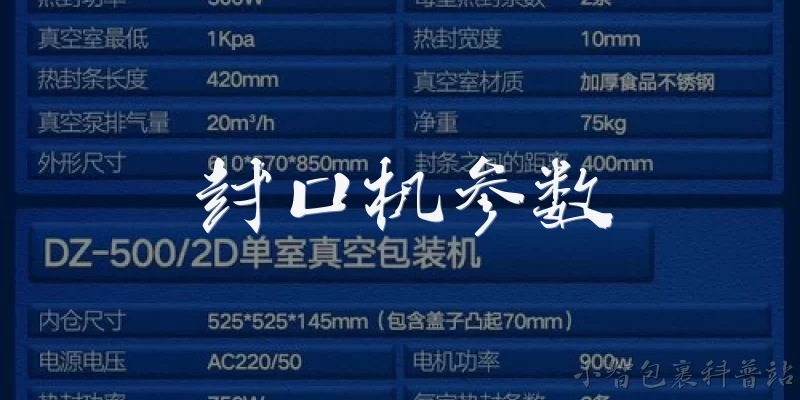
A: Key parameters for selecting a sealing machine include sealing width, sealing length, temperature range, pressure, and speed. Sealing width determines the seal's thickness and strength, typically ranging from 2mm to 10mm. Temperature range must match your material; for example, polyethylene requires 120-180°C, while polypropylene needs 140-200°C. Pressure ensures proper adhesion, usually 0.2-0.6 MPa. Speed affects throughput, from 0-12 m/min. Also consider voltage (110V/220V), power consumption, and machine dimensions. Matching these parameters to your packaging material and production volume ensures optimal seal quality and efficiency.
Q: How does sealing temperature affect the quality of the seal?
A: Sealing temperature is critical for seal quality. Too low, and the material won't melt sufficiently, causing weak or incomplete seals. Too high, and the material may burn, shrink, or degrade, leading to leaks or cosmetic defects. The optimal temperature depends on the material's melting point and thickness. For instance, LDPE seals at 120-160°C, while PET/PE laminates need 150-180°C. Consistent temperature control within ±2°C is essential, especially for high-speed operations. Most machines offer adjustable thermostats or digital controllers. Always test with your specific material to find the ideal setting, and monitor for changes in ambient temperature or material batch.
Q: What is the role of pressure in a sealing machine, and how is it adjusted?
A: Pressure in a sealing machine ensures the heated sealing bar contacts the material uniformly, forcing melted polymer into the seal area. Insufficient pressure causes weak seals with air pockets; excessive pressure can squeeze out material, creating thin or cut seals. Typical pressure ranges from 0.2 to 0.6 MPa (2-6 bar), adjusted via a pressure regulator on pneumatic or mechanical systems. For consistent results, pressure should be balanced with temperature and dwell time. Many machines allow independent adjustment of pressure for different materials. Regularly check pressure gauges and inspect seals for uniformity to maintain quality.
Q: What sealing speed should I choose for my packaging line?
A: Sealing speed depends on your production volume, material, and seal requirements. Speeds range from 0-12 m/min for standard machines, up to 30 m/min for high-speed models. Faster speeds reduce dwell time, requiring higher temperatures or pressures to achieve proper seals. For heat-sensitive materials, slower speeds prevent burning. Calculate your required throughput: if you need 20 packages per minute, and each package is 30cm long, you need at least 6 m/min. Always test at different speeds to find the sweet spot where seal strength, appearance, and efficiency balance. Consider future growth; a variable-speed drive offers flexibility.
Q: How do I calibrate the sealing parameters for a new material?
A: To calibrate for a new material, start with the manufacturer's recommended temperature, pressure, and speed. Run a series of test seals, adjusting one parameter at a time. Begin with temperature: increase in 5°C increments until the seal is strong but not burnt. Then adjust pressure to eliminate air gaps. Finally, fine-tune speed for optimal dwell time. Perform peel tests or burst tests to evaluate seal integrity. Document the settings for future reference. Consider material thickness, additives, and environmental conditions. Regular calibration ensures consistent quality, especially when switching between materials or after machine maintenance.
Words of experience
Common scenarios of "Sealing machine parameters"
【Operator】 Hey, can you help me set up the sealing machine? I'm not sure about the parameters.
【Technician】 Sure! What type of sealing machine are you using?
【Operator】 It's a continuous band sealer, model CBS-1100.
【Technician】 Got it. The key parameters are temperature, speed, and pressure. What material are you sealing?
【Operator】 We're using polyethylene bags, about 0.05 mm thick.
【Technician】 For PE, a temperature around 180-200°C usually works. Start at 190°C. Speed depends on the thickness; for 0.05 mm, try a medium speed, say 10-12 meters per minute.
【Operator】 And pressure? The machine has a pressure knob but no gauge.
【Technician】 Set it to a moderate pressure—just enough to hold the bands together without crushing the material. Turn it to about 3 on a scale of 1-5 if that's what you have.
【Operator】 Okay, I'll set temperature to 190°C, speed to 11 m/min, and pressure to 3. Should I preheat?
【Technician】 Yes, always preheat for at least 5 minutes. Also, make sure the bands are clean and aligned.
【Operator】 I've set everything. Let me test a seal.
【Technician】 How does it look?
【Operator】 The seal seems weak; it peels apart easily.
【Technician】 That could be due to low temperature or too fast speed. Try increasing temperature to 200°C and reducing speed to 9 m/min.
【Operator】 Okay, changed. Testing again.
【Technician】 Better?
【Operator】 Yes, much stronger. But now the edges are a bit wrinkled.
【Technician】 Wrinkling usually means too much pressure or temperature. Reduce pressure to 2 and lower temperature to 195°C.
【Operator】 Alright, adjusted. The seal looks perfect now!
【Technician】 Great! Remember these settings for this material. For different thicknesses or materials, you'll need to adjust accordingly.