Chili Paste Factory Equipment:What essential equipment is needed to set up a chili paste factory?
Q: What essential equipment is needed to set up a chili paste factory?
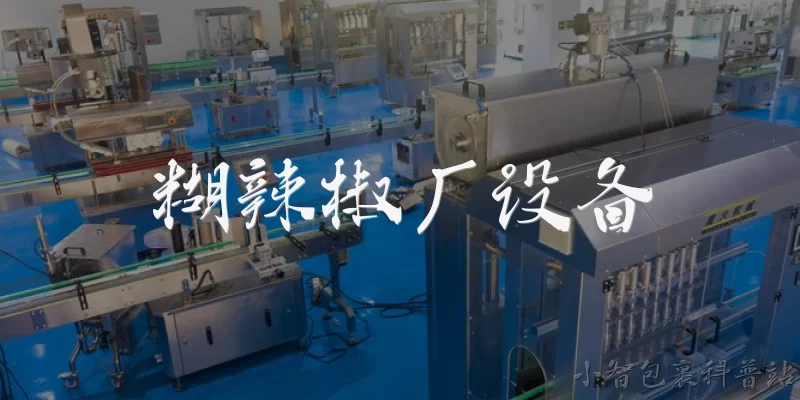
A: Setting up a chili paste factory requires a range of specialized equipment to ensure efficient production and consistent quality. The core machinery includes chili washing machines, destemming and seeding machines, crushers or grinders, and mixing tanks. For large-scale operations, you will also need a paste filling machine, sealing machine, and sterilization equipment such as a tunnel pasteurizer or retort. Additionally, a boiling or cooking kettle is essential for blending chili with oil, vinegar, and spices. Supporting equipment like conveyor systems, storage tanks, and packaging lines helps streamline the workflow. It's also important to invest in quality control tools, such as pH meters and viscosity testers, to maintain product standards. Depending on your budget and production capacity, you can choose between semi-automatic and fully automatic lines. A typical mid-sized factory might use a stainless steel grinder, a 500-liter cooking kettle, and an automatic filler to achieve a throughput of 1-2 tons per day. Always prioritize food-grade stainless steel (304 or 316) to prevent corrosion and ensure hygiene.
Q: How does the chili paste grinding process work in a factory setting?
A: In a chili paste factory, the grinding process is critical for achieving the desired texture and flavor release. First, dried or fresh chilies are cleaned and destemmed, then coarsely crushed using a hammer mill or roller crusher. The crushed chilies are then fed into a colloid mill or a stone grinder, which shears the peppers into a fine paste. For smooth chili paste, a colloid mill with adjustable gap settings is ideal, as it can reduce particle size to 20-50 microns. Some factories use a two-stage grinding system: a pre-grinder to break down the chilies and a fine grinder to achieve uniform consistency. The ground paste is then transferred to a mixing tank where oil, salt, garlic, and other ingredients are added. Temperature control during grinding is important to prevent overheating, which can degrade capsaicin and alter flavor. Industrial grinders often have water-cooled jackets for this purpose. After grinding, the paste may pass through a sieve or filtration unit to remove any remaining fibrous material, ensuring a smooth final product.
Q: What are the key considerations for maintaining hygiene and safety in chili paste factory equipment?
A: Maintaining hygiene and safety in chili paste factory equipment is paramount to prevent contamination and ensure product shelf life. All equipment that contacts chili paste should be made of food-grade stainless steel (304 or 316) and designed with smooth, crevice-free surfaces to avoid bacterial buildup. Clean-in-place (CIP) systems are highly recommended for automatic cleaning of tanks, pipes, and fillers, reducing downtime and improving sanitation. Regular disinfection with food-safe sanitizers, such as peracetic acid or hydrogen peroxide, is necessary, especially after processing batches with different recipes. Equipment should also be easy to disassemble for manual cleaning where CIP is not feasible. Safety features like emergency stops, guards on moving parts (e.g., grinders and conveyors), and proper ventilation to handle chili dust and fumes are essential. Additionally, workers should wear protective gear, including gloves, masks, and eye protection, as chili can cause skin and eye irritation. Finally, routine maintenance and calibration of machines (e.g., temperature sensors, fillers) ensure consistent quality and prevent hazards. Documentation of cleaning schedules and safety protocols is also required for regulatory compliance.
Dialogue about
Common scenarios of "Chili Paste Factory Equipment"
【Sales Manager】 Good morning, Mr. Chen. Thank you for visiting our booth. I understand you're looking to set up a chili paste production line?
【Factory Owner】 Yes, that's right. We're expanding our sauce business and need equipment for chili paste. Can you give me an overview of what's required?
【Sales Manager】 Absolutely. The core equipment includes chili washing machines, dryers, grinders, mixers, filling machines, and packaging machines. The scale depends on your desired capacity.
【Factory Owner】 We're aiming for about 1 ton per hour. What would be the key machines for that capacity?
【Sales Manager】 For 1 ton per hour, you'd need a continuous washing line, a hot air dryer, a hammer mill or colloid mill for grinding, a ribbon blender for mixing, and a piston filling machine for jars or pouches.
【Factory Owner】 What about the grinding process? We want a smooth paste, not too coarse.
【Sales Manager】 A colloid mill would be ideal for smooth chili paste. It can grind chili into a fine paste with adjustable fineness. We also have stone mills for traditional texture.
【Factory Owner】 I see. What's the typical price range for a complete line of this capacity?
【Sales Manager】 The total cost depends on the automation level and materials. For a semi-automatic line, it could range from $50,000 to $100,000. Fully automatic with stainless steel 304 would be higher, around $150,000.
【Factory Owner】 That's within our budget. Can you provide a detailed layout and power requirements?
【Sales Manager】 Of course. Our engineer can design a layout based on your factory space. Power consumption is roughly 100-150 kW for the whole line.
【Factory Owner】 What about maintenance and after-sales support?
【Sales Manager】 We offer a one-year warranty, free installation and training, and lifelong technical support. We also supply spare parts at cost.
【Factory Owner】 That sounds good. Can we visit a factory that uses your equipment?
【Sales Manager】 Certainly. We can arrange a visit to a client's factory in Guangdong. They produce chili paste with our line. I'll send you the details.
【Factory Owner】 Great. Also, we need packaging in glass jars and sachets. Can your filling machine handle both?
【Sales Manager】 Yes, we have filling machines that can handle both jars and sachets with quick changeover. We'll customize the nozzles and conveyor accordingly.
【Factory Owner】 What's the lead time for delivery and installation?
【Sales Manager】 Typically 30-45 days after deposit, plus 7-10 days for installation and commissioning. We'll coordinate with your schedule.
【Factory Owner】 Alright, please send me a formal quotation with specifications. I'll discuss with my team and get back to you.