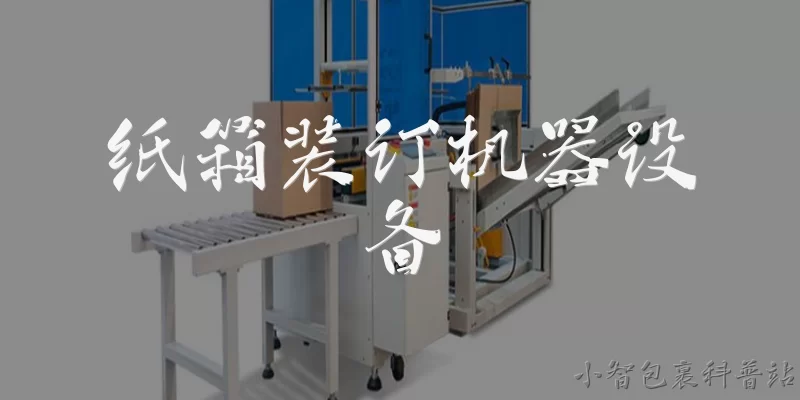
Carton binding machinery and equipment:What is carton binding machinery and equipment?
Q: What is carton binding machinery and equipment?
A: Carton binding machinery and equipment refers to industrial devices used to assemble and secure corrugated cardboard boxes. Common types include stitchers, gluers, and taping machines. Stitchers drive metal staples through overlapping flaps, while gluers apply hot melt adhesive for a strong bond. Taping machines use pressure-sensitive tape. These systems automate folding, aligning, and binding, dramatically increasing packaging speed and consistency compared to manual methods. They are essential in logistics, food, and e-commerce industries where high-volume carton sealing is required, ensuring boxes remain closed during storage and transport.
Q: How does a carton stitcher differ from a carton gluer?
A: A carton stitcher uses metal wire staples to mechanically join corrugated box flaps, creating a very strong but potentially rust-prone closure. A carton gluer applies hot melt adhesive to bond flaps, producing a smooth, puncture-resistant seal that is fully recyclable and tamper-evident. Stitchers are faster for heavy-duty boxes, while gluers suit food and pharmaceutical packaging where metal contamination is a concern. Both are core carton binding equipment, but the choice depends on load weight, moisture exposure, and recycling requirements. Many modern machines combine stitching and gluing in one line for flexibility.
Q: What factors should be considered when selecting carton binding equipment?
A: Key factors include carton size range, board thickness, and production speed. You must match the machine's throat depth and stitch or glue pattern to your box dimensions. Consider the binding method: stitchers for heavy loads, gluers for clean seams, or both. Automation level matters—manual, semi-auto, or fully automatic lines affect labor costs. Power supply, compressed air availability, and floor space are practical constraints. Also evaluate maintenance needs, spare parts availability, and vendor support. Finally, budget: entry-level stitchers are cheaper, while high-speed gluers cost more but reduce per-box cost at scale. Always test with your actual cartons.
Q: What are the main maintenance tasks for carton binding machinery?
A: Regular maintenance ensures reliable carton binding. Daily tasks include cleaning glue nozzles or staple heads, checking for jammed debris, and lubricating moving parts like chains and bearings. Weekly, inspect belts for tension and wear, and verify stitch depth or glue pattern accuracy. Monthly, replace worn staple drivers or glue valves, and check electrical connections. Quarterly, calibrate sensors and adjust folding guides. Always follow the manufacturer's manual for specific intervals. Neglecting maintenance leads to misfeeds, weak bonds, and costly downtime. Keep a log of service dates and use only approved lubricants and spare parts to preserve warranty and performance.
Q: What are the latest trends in carton binding machinery and equipment?
A: Recent trends focus on automation, sustainability, and smart features. Fully automatic lines now integrate robotic feeding and vision systems to detect flap alignment, reducing waste. Digital glue application uses sensors to apply adhesive only where needed, cutting consumption. Eco-friendly hot melts and staple-free binding methods are gaining traction. IoT-enabled machines provide real-time data on throughput, jams, and maintenance needs via cloud dashboards. Modular designs allow quick changeover between carton sizes without tools. Additionally, energy-efficient motors and noise-reduction enclosures improve workplace safety. These innovations help manufacturers meet rising e-commerce demand while lowering operating costs and environmental impact.
Words of experience
Common scenarios of "Carton binding machinery and equipment"
【Sales Manager】 Good morning, Mr. Johnson. Thank you for visiting our booth. How can I assist you with carton binding machinery today?
【Production Manager】 Good morning. We are looking to upgrade our carton binding line. Our current machines are outdated and causing bottlenecks. Can you tell me about your latest models?
【Sales Manager】 Absolutely. Our newest model, the CB-2000, is a fully automatic carton binding machine. It can handle up to 2000 cartons per hour with precision stitching. Would you like a detailed brochure?
【Production Manager】 That sounds impressive. What about the stitching speed and the types of stitches it can produce? We need both single and double stitching for different box sizes.
【Sales Manager】 The CB-2000 supports single, double, and even quadruple stitching. The speed is adjustable, and it can switch between stitch types quickly with minimal downtime. It also has a touchscreen interface for easy operation.
【Production Manager】 What about maintenance and spare parts? We want to ensure minimal downtime and easy access to parts.
【Sales Manager】 We provide a comprehensive maintenance kit and have a global network of spare parts distributors. Our machines are designed for easy access to critical components, reducing maintenance time by 30% compared to older models.
【Production Manager】 That's good to hear. Can you tell me about the power requirements and floor space needed?
【Sales Manager】 The CB-2000 requires a 3-phase 380V power supply and occupies about 10 square meters of floor space. It's designed to fit into most production lines with minimal adjustments.
【Production Manager】 Our facility has limited space. Do you have a smaller model that still offers high speed?
【Sales Manager】 Yes, we have the CB-1000 compact model. It handles up to 1200 cartons per hour and requires only 6 square meters. It still offers single and double stitching, but not quadruple.
【Production Manager】 That might be more suitable. What is the price difference between the CB-2000 and CB-1000?
【Sales Manager】 The CB-2000 is priced at $50,000, while the CB-1000 is $35,000. Both come with a one-year warranty and free installation.
【Production Manager】 Does the warranty cover all parts and labor?
【Sales Manager】 Yes, it covers all parts and labor for the first year. We also offer extended warranty options and annual maintenance contracts.
【Production Manager】 Can we schedule a demo at our facility to see how it fits into our line?
【Sales Manager】 Of course. We can arrange a demo next week. Just let us know your preferred date and time, and we'll bring the machine for a live demonstration.
【Production Manager】 That would be great. Also, what about training for our operators?
【Sales Manager】 We provide two days of on-site training for up to five operators. Additional training can be arranged at a nominal cost.
【Production Manager】 Sounds good. I'll discuss with my team and get back to you to schedule the demo.